

Opening a retail store: the IT checklist in two weeks
Network, segmented Wi-Fi, Shopify POS, payment, video surveillance, backups: what to plan so a new store is operational on day one.
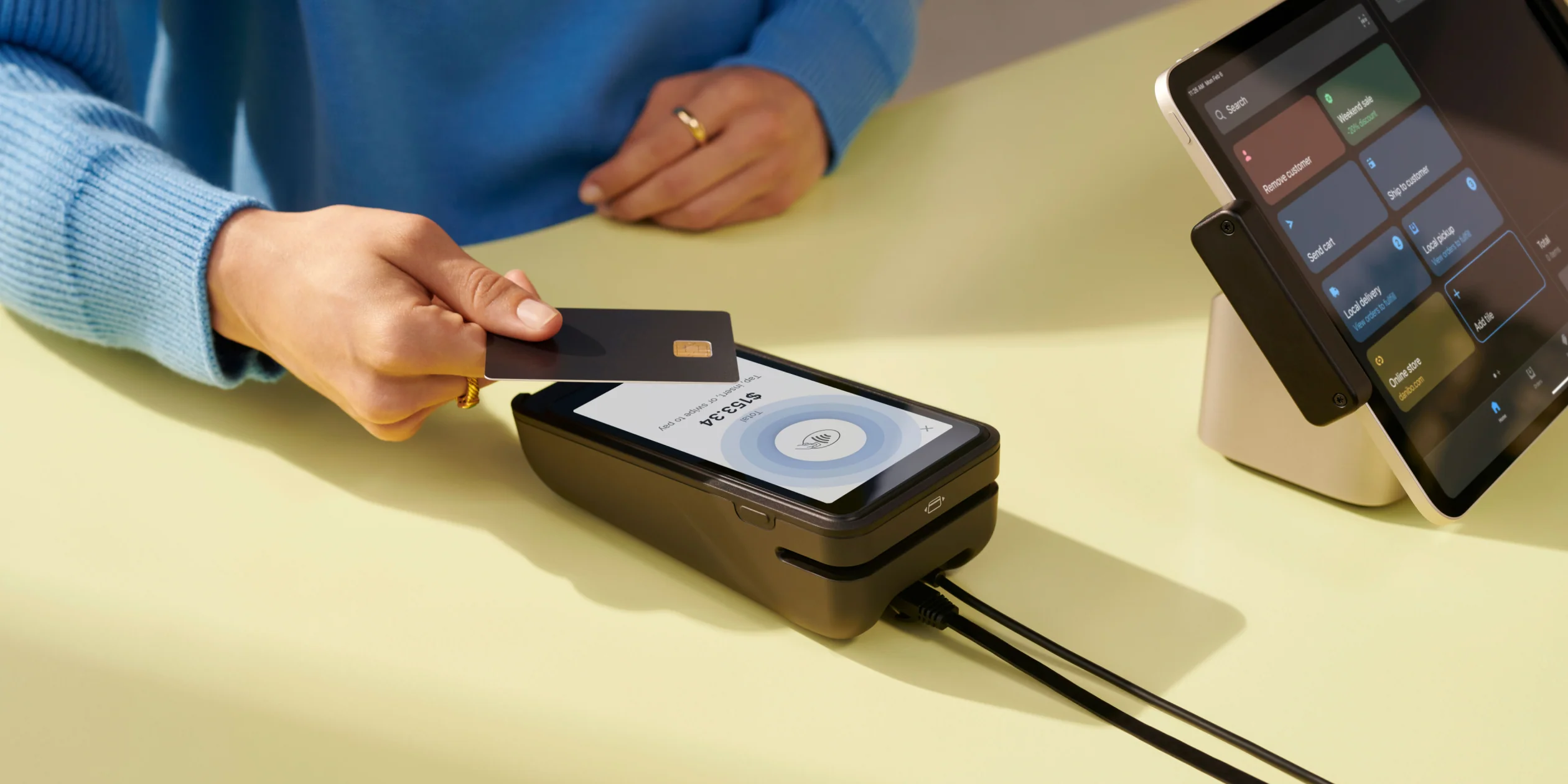
A fashion brand calls us six weeks before the opening of a pop-up store in Paris’s 1st arrondissement, with two weeks to go before the keys are handed over. The schedule is non-negotiable. The store team is being trained in parallel with the build-out. The question is simple: what do we do, in what order, so it works on day one? Here is the checklist we apply on retail openings.
D-21: connectivity
The first risk on a retail opening is connectivity. Pro fiber (Orange Pro, SFR Business, or an independent operator like Kosc) takes a minimum of three weeks between the order and activation. That is the very first thing to trigger, ideally before lease signature when possible. As a fallback, 4G/5G (a Livebox 5G, a Teltonika router) gets the store running on opening day but stays a stopgap.
Alongside the fiber, we plan a secondary link: 5G on a different operator (Free or Bouygues if Orange is primary), with automatic failover via a multi-WAN router (Peplink, Teltonika, FortiGate). The monthly cost is marginal and a store that loses internet loses its payment terminal and its POS.
D-14: internal network
A store needs at least three logically separated networks:
- Staff network — back-office computers, printers, accounting access.
- Payment network — Shopify POS terminals, card readers (Stripe Terminal, Adyen, SumUp); PCI-DSS compliance demands isolation.
- Guest network — public Wi-Fi for customers, captive portal, throttled bandwidth, isolated from the rest.
Segmentation runs either on a FortiGate or entry-level firewall plus VLANs on the switch, or via an integrated system like Aruba Instant On or UniFi. For an 80 m² store with a four-person team, UniFi works fine with a controlled hardware budget.
D-10: Shopify POS and the till
On Shopify POS, prep boils down to: create the “location” in Shopify Admin, link products to that location for multi-store stock management, configure roles (sales associate, manager) with short PINs, set up receipt printers (Star or Epson, network Ethernet preferred — fewer issues than Bluetooth), test the cash drawer and barcode scanner.
The payment terminal (Stripe Terminal for simplicity, Adyen for multi-country) must be ordered by D-21 — shipping takes 7 to 10 days and live charge tests must be done before opening to avoid surprises on commissions or 3DS compliance.
D-7: video surveillance and physical security
UniFi or Hikvision IP cameras, an NVR (network video recorder) on the staff network, minimum 30-day retention (CNIL-compliant for retail video monitoring). Avoid pure cloud storage for retail: fiber upload bandwidth isn’t built for it, and network outages lose critical recordings.
Intrusion alarm (Verisure, EPS, or Ajax for a self-managed solution) installed alongside the video, with simple access control on the back door (badge or keypad). All these solutions ship with mobile apps that let leadership monitor open/close remotely.
D-3: backup, identity, support
The store team needs personal Microsoft 365 or Google Workspace accounts (named email), a shared folder (SharePoint or Drive) for commercial documents, and Shopify back-office access with the right permissions (associate doesn’t see margin, manager sees the sales report). Everything goes through the brand’s central IdP (Entra ID in 80% of cases), no local accounts.
For support: a dedicated Slack or Teams channel, a 9am-7pm IT hotline, and physical intervention within 4 hours in Île-de-France if something breaks on a Saturday.
Day one
On the pop-up opening described in the intro, the brief was: “it has to work.” We deployed two technicians on site for opening day, spare equipment in the car, a direct line with Shopify Plus support. Zero blocking incidents on day one. The primary fiber dropped at 4pm for 22 minutes (operator-side incident in the neighborhood); automatic 5G failover; the store team didn’t notice.
If you are preparing a retail store opening in Paris or elsewhere and want an IT partner who knows the retail traps, the form at the bottom of the home is built to start the conversation.
Field-report context: Paris fashion brand, pop-up opening (anonymized)
Related service
Point of Sale — your IT partner in Paris
Performant POS systems and traffic analytics to elevate the customer experience and grow sales.
Discover the serviceRead next
More on modern SMB IT management.

Choosing an IT services provider in Paris in 2026
The 8 criteria that separate a real IT services provider from a reseller: scope, SLAs, security, AI, multi-OS. A guide for demanding Paris SMEs.
Read the post
Apple Business Manager and MDM: what changes in 2026
Declarative management, Managed Apple Accounts, Platform SSO, Apple Intelligence in business: the state of the art of Apple MDM and ABM for Mac fleets in 2026.
Read the post
Dante: audio over IP for meeting rooms and auditoriums
How Dante replaces analogue audio cabling with IP networking: principles, hardware, AES67, Dante Director and business and event use cases.
Read the post